
Quick Summary
The best jacket for resort skiing is a waterproof, breathable shell or a lightly insulated jacket matched to your typical conditions. Look for a waterproofing rating of 15K to 20K or higher, fully taped seams, and good ventilation.
- Aim for 15K-20K waterproofing as a practical sweet spot for wet snow and damp lifts.
- Choose 20K+ waterproofing with 15K+ breathability for storm days.
- Fully taped seams matter as much as the headline waterproofing rating.
- Pit zips or core vents let you cool down on the run and close them on the lift.
- Prioritize waterproofing and ventilation over insulation thickness, since you can add warmth with a midlayer.
Table of Contents
- How to Choose a Ski Jacket for Resort Skiing
- Shell Ski Jacket vs Insulated: Which Fits Resort Days
- Our Top Resort Ski Jacket Picks at ABsnowlife
- Booking Your Resort Jacket Before the Next Storm
- Frequently Asked Questions
How to Choose a Ski Jacket for Resort Skiing
For resort skiing, the best jacket is a waterproof, breathable shell or a lightly insulated jacket matched to your typical conditions. Measurable specs, not marketing, separate a good jacket from a frustrating one.
Start with waterproofing and breathability ratings
Waterproofing is a hydrostatic head rating in mm; breathability is a moisture-vapor transmission rate in g/m²/24h (or RET, where lower is more breathable). For resort skiing:
- 10K/10K: adequate for dry, cold days and light snow.
- 15K-20K waterproofing: a practical sweet spot for wet snow and damp lifts.
- 20K+ waterproofing with 15K+ breathability: the range serious resort skiers choose for storm days.
Fully taped seams and water-resistant zippers matter as much as the headline rating, a 20K fabric with untaped seams will leak at the shoulders and hood.
Match breathability to how hard you ski
Resort skiing alternates between hard effort on the run and near-zero effort on the lift, so ventilation matters. Look for:
- Pit zips or core vents you can open on the climb or on warm afternoons.
- A breathable lining that does not feel clammy when you sweat.
- A powder skirt to keep snow out on deep days and on falls.
Fit, layering, and mobility
A resort jacket should fit over a base layer and midlayer without compressing insulation. Check that you can raise your arms overhead and reach across your body without the hem riding up or shoulders binding. A relaxed cut leaves room for a fleece or puffy midlayer; a trim cut limits layering. You can browse a waterproof, breathable softshell hooded jacket that suits resort days.
Features that earn their place on resort days
- Helmet-compatible hood with adjusters that cinch around the helmet.
- Adjustable cuffs with inner wrist gaiters, plus a hem drawcord to seal out wind and snow.
- Pockets: a lift-pass pocket, an interior goggle pocket, and hand pockets above a harness or pack strap.
- Jacket-to-pant attachment to keep snow out on falls.
Don't judge warmth by thickness alone. A thick insulated jacket can overheat you on sunny runs, so pair a shell with a midlayer if you want flexibility across temperatures.
A quick resort-day decision path
- Cold, dry, clear days: insulated jacket or shell plus a puffy midlayer.
- Wet snow or rain-snow mix: 15K+ waterproofing, fully taped seams, water-shedding hood.
- Mild spring conditions: uninsulated shell with pit zips and a light base layer.
- Windy days: shell with a helmet-cinching hood and hem drawcord.
Prioritize waterproof rating, seam sealing, and ventilation over insulation thickness. You can always add warmth with a midlayer, but you cannot add waterproofing to a leaky jacket.
The waterproof and breathability ratings below set the practical range for resort jackets.
| Rating | Typical use | Note |
|---|---|---|
| 10K/10K | Dry, cold days and light snow | Adequate for basic conditions |
| 15K-20K waterproofing | Wet snow and damp lifts | Practical sweet spot |
| 20K+ waterproofing, 15K+ breathability | Storm days for serious skiers | Preferred by serious resort skiers |
Shell Ski Jacket vs Insulated: Which Fits Resort Days
A shell ski jacket has no built-in insulation, so you control warmth with layers underneath. An insulated jacket adds warmth in the jacket itself, suiting colder days and people who run cool. Choose based on your typical conditions, how you layer, and how long you expect the jacket to last.
How each type behaves on a resort day
- Shell: the most flexible option for variable days; add or remove a midlayer as temperatures shift. It dries faster and packs smaller for travel.
- Insulated: works well if you ski mainly in very cold weather and want one layer for most conditions. Warmer on lifts but less adaptable on mild afternoons.
- 3-in-1 (shell with removable insulated liner): both options in one piece, with a zip-in liner for cold days and a lighter setup on mild days. The trade-off is more weight and bulk than a dedicated shell.
Layering by temperature and activity level
Plan your layers, not just the jacket. A common pattern for resort skiers:
Unisex Waterproof Padded Ski Jacket – Relaxed Fit →
- Well below freezing, low activity: base layer + fleece or light puffy + insulated jacket or shell.
- Cold but active skiing: base layer + light midlayer + shell; open pit zips on the run, close them on the lift.
- Near freezing and wet: base layer + high-waterproofing shell; add a midlayer only if you run cool.
- Mild spring days: light base layer + uninsulated shell with vents open.
If you tend to overheat on the run but freeze on the lift, a shell plus a midlayer you can unzip gives you more control than a single insulated jacket.
Total cost and value over time
A shell often costs more upfront than a budget insulated jacket but can be the better value over several seasons, since you can upgrade midlayers separately and use the shell for other winter activities. Compare:
- Warranty length and coverage (materials and workmanship versus normal wear).
- Repairability: brand repairs for zippers, seams, and tears, plus replacement parts availability.
- Durability details: reinforced shoulders and cuffs, abrasion-resistant fabric, quality zippers.
- Cost per season: price divided by the seasons you realistically expect to use it.
Fit and sizing with layers in mind
Sizing varies by brand, so assess fit with the layers you actually wear. Try the jacket on over a midlayer, raise your arms, and check that the hem stays down and shoulders do not bind. If between sizes, size up for layering room in a shell, and look for size ranges that include your measurements.
Choose a shell if you ski variable conditions and want one jacket to adapt across the season; choose an insulated or 3-in-1 jacket if you ski mostly in cold weather and prefer a simpler setup. Either way, compare warranty, repairability, and cost per season, not just the sticker price.
Our Top Resort Ski Jacket Picks at ABsnowlife
At ABsnowlife, the collection includes ski jackets with different listed features.
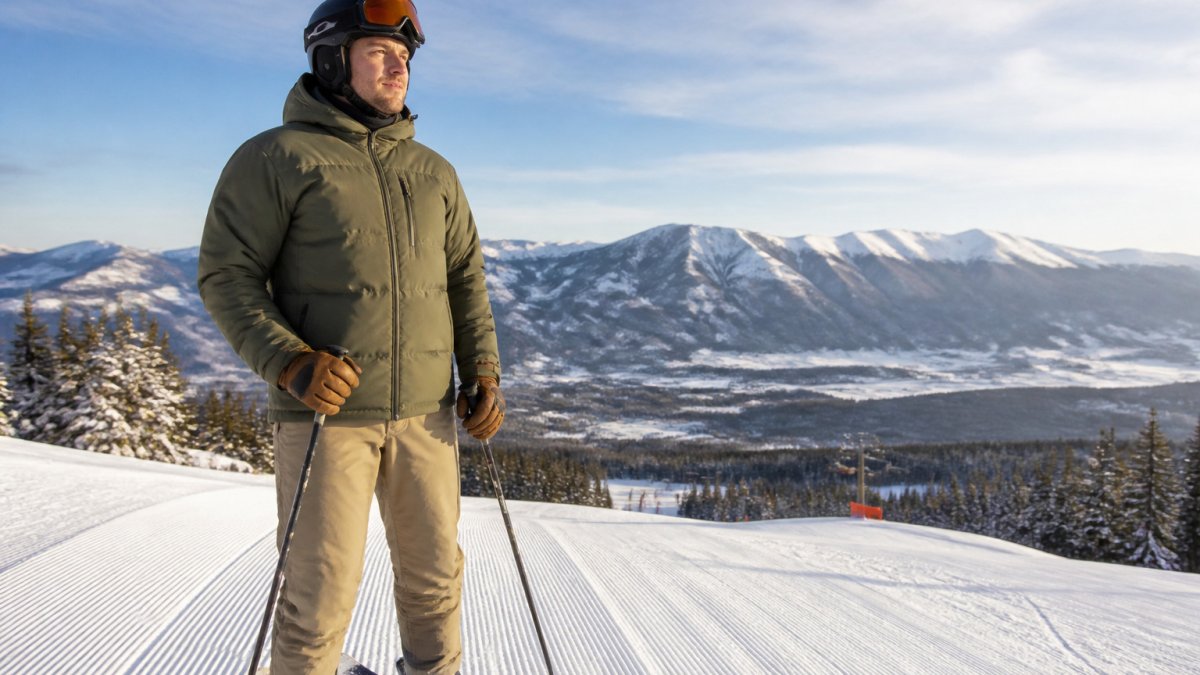
- Unisex Waterproof Padded Ski Jacket (relaxed fit), $199.99 CAD: Relaxed, unisex fit. Sizes S to XXL.
- Columbia Omni-Tech Men's Whirlibird 3 Interchange 3-in-1 Insulated Ski Jacket, $217.49 CAD: The listing describes a zip-in 3-point Interchange System, a waterproof/breathable critically seam-sealed shell, and a removable, adjustable hood.
- Salomon Women's Fantasy Waterproof Insulated Ski Jacket, $262.49 CAD: Waterproof-breathable laminate, removable hood, and snap connectors for compatible ski pants. You can compare it directly in the waterproof insulated women's options.
- DC Shoes 'Cruiser' Jacket, Snow Leopard (Women's), $249.99 CAD: Weather Defense 10K waterproofing, a helmet-compatible hood, and a jacket-to-pant attachment system.
Best for: Skiers who want one jacket that handles changing resort conditions. Skip if: You mainly ski deep backcountry terrain, where a lighter, more specialized shell is usually the better fit.

Booking Your Resort Jacket Before the Next Storm
Gear up for the next storm with goggles that pair well with any of the jackets above.
Frequently Asked Questions
What is the best type of jacket for resort skiing?
The ABsnowlife collection includes ski jackets with different listed features. Check each product listing to compare those features with your needs.
How waterproof should a ski jacket be?
The Unisex Waterproof Padded Ski Jacket listing gives a supplier-listed waterproof coefficient of 15,000, but does not specify units or a test method. Check the product listing for the details provided.
How much should I spend on a resort ski jacket?
At ABsnowlife, resort-ready jackets currently range from $199.99 for the Unisex Waterproof Padded Ski Jacket to $339.99 for the Oakley TNP TBT Insulated Jacket. The Salomon Women's Fantasy Waterproof Insulated Ski Jacket sits at $262.49, and the Columbia Omni-Tech Whirlibird 3 Interchange at $217.49 gives you a zip-in liner for layering.
Pick the jacket that matches your typical conditions, check the fit, and get out on the hill with confidence. Shop the ABsnowlife collection today and find the jacket that keeps you warm and dry all season.