
Last Updated: October 30, 2026
Quick Summary
The best winter jackets for Canadian climate match insulation, weatherproofing and fit to the conditions you actually face. Our top pick is the Columbia Whirlibird 3 Interchange at $217.49, a three-in-one system with an 80g synthetic liner that covers more of the season than any single jacket on our list.
- The Men's Apex Waterproof Jacket at $299.00 is the priciest pick and best for wet coastal winters.
- The Doudoune pour froid extrême is a women's long parka rated to -35°C and priced at $129.99.
- A temperature rating is a manufacturer's guide, not a guarantee, because warmth depends on layers, activity and wind.
- Choose synthetic insulation for wet climates and high-output activity, and down for dry, deep cold.
- The Salomon Women's Fantasy at $262.49 is a downhill ski jacket with fully taped seams and a removable hood.
Quick Comparison: Best Winter Jackets for the Canadian Climate
Choosing the best winter jackets for Canadian climate means matching insulation, weatherproofing and fit to the conditions you actually face, not the conditions on a marketing label. At ABsnowlife, we curate winter gear for mountain days and local trails alike, and we have watched shoppers overbuy warmth for mild coastal winters and underbuy protection for prairie cold snaps. A winter jacket is an insulated outer layer designed to trap body heat while blocking wind, snow and rain.
| Jacket | Price (CAD) | Insulation | Best For |
|---|---|---|---|
| Columbia Whirlibird 3 Interchange | $217.49 | Synthetic, 80g | Overall versatility |
| Men's Apex Waterproof Jacket | $299.00 | Synthetic fill | Wet coastal winters |
| Doudoune pour froid extrême | $129.99 | Polyester | Deep cold |
| Salomon Women's Fantasy | $262.49 | Polyester | Women skiers |
| Oakley Division 3.0 | $239.99 | Insulated | Men's ski style |
1. Columbia Whirlibird 3 Interchange: Best Overall 3-in-1
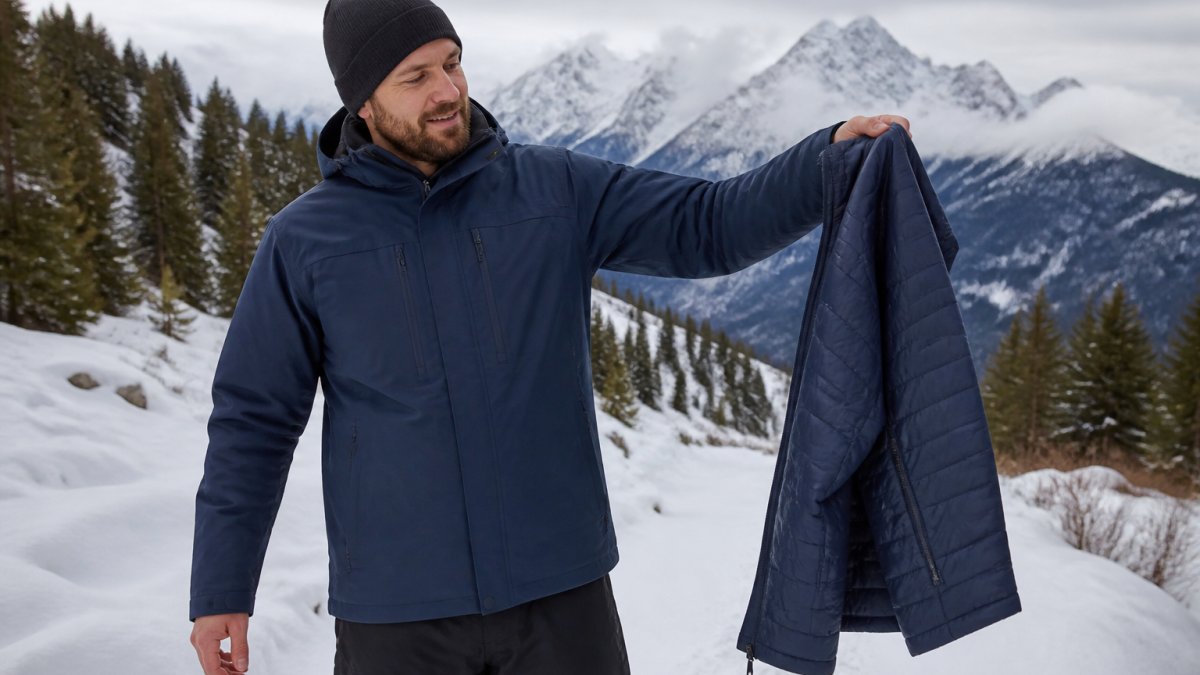
Our top pick is the Columbia Whirlibird 3 Interchange, a three-in-one system that covers more of the season than any single jacket here. The Omni-Tech shell is waterproof and breathable with critically seam-sealed construction, and the zip-in Omni-Heat reflective liner adds warmth on demand. The 80g synthetic insulation is paired with features like underarm venting, a snap-back powder skirt and a drop tail. At $217.49, it is a versatile option on this list. Shop the Columbia Whirlibird 3 Interchange.

2. Men's Apex Waterproof Jacket: Best for Wet Coastal Winters
The Men's Apex Waterproof Jacket is designed and tested in Canada for moderate to harsh weather conditions. The 8000MM waterproof rating, fully taped seams and waterproof zippers keep sleet and rain out, while the windproof design and interior powder skirt seal off gusts. A fleece interior adds cozy comfort, and zippered vents let you dump heat on a fast hike. It carries a ski pass pocket, reflective stripes for dark commutes, and YKK zippers for durability. At $299.00 it is the priciest pick here. View the Men's Apex Waterproof Jacket.

3. Doudoune pour froid extrême: Best Deep-Cold Parka
The Doudoune pour froid extrême is marketed with thermal protection rated to -35°C. This women's long parka uses 100% polyester insulation and is described as breathable. A double zipper adjusts ventilation, side snap openings free up movement, and zippered pockets protect hands and valuables. The long cut is offered in black and navy. At $129.99, it is priced as a deep-cold coat. See the Doudoune pour froid extrême.

4. Salomon Fantasy and Columbia Women's Whirlibird: Best Women's Winter Jackets
Women's-specific winter jackets should fit women's bodies, not scale down a men's pattern, and these two deliver. The Salomon Women's Fantasy is a downhill ski jacket with a waterproof-breathable polyester laminate, fully taped seams and polyester insulation for warmth. A removable zip-off hood, wicking interior cuffs, a lift-pass pocket and snap-in ski-pant connectors make it slope-ready, and the nylon lining slides easily over layers. The Columbia Women's Whirlibird 3 Interchange, at $217.49, offers the same three-in-one flexibility as our top pick, with an Omni-Heat reflective liner, an Active Fit and an abrasion-resistant chin guard. Shop the Salomon Women's Fantasy.
5. Best Ski Jackets for Men: Oakley Division 3.0 and Unisex Waterproof Ski Jacket
Skiers who want style and warmth together should look at the Oakley Division 3.0 Insulated Jacket, an insulated layer in a Black/Desert Camo colorway that pairs cleanly with winter layers at $239.99. It is the fashion-forward choice for the lift line. If you need maximum wet-snow protection instead, the Unisex Waterproof Padded Ski Jacket pairs a polyester shell and lining with breathable, waterproof and windproof features and a relaxed unisex fit across six colors at $199.99. View the Oakley Division 3.0.
6. Winter Jackets by Temperature: What a Rating Actually Means
A temperature rating is a manufacturer's guide, not a guarantee, because warmth depends on your layers, your activity level and the wind. Ratings assume a baseline of moderate activity and a reasonable midlayer, so a jacket rated to -35°C worn over a t-shirt in a stiff wind chill will feel very different than the same jacket on a calm walk. Treat any rating as a starting point, then adjust with layering.
How ratings are actually produced
The number you see on a hangtag is usually a comfort claim for a specific layering assumption, not a survival limit. Two jackets with the same -30°C claim can perform very differently if one uses 200g of synthetic fill and the other uses 550-fill-power down, because loft, fit and wind resistance all change the effective warmth.
Wind chill changes the math
Wind is the variable most shoppers underestimate. A -20°C calm day and a -20°C day with 30 km/h wind feel dramatically different, and a jacket's windproofing matters as much as its insulation. A shell with fully taped seams and a wind-blocking membrane can make a lighter jacket feel warmer than a heavier, wind-permeable parka. When you compare ratings, check whether the jacket has a windproof membrane, an adjustable hem and cuffs, and a hood that cinches down, those features preserve warmth far more than an extra 20g of fill.
Activity level and sweat
Warmth ratings assume you are moving at a moderate pace. Stand still at a bus stop and you will feel colder than the rating suggests; hike uphill and you will overheat in the same jacket. That is why layering beats a single heavy coat: a moisture-wicking base layer, an insulating midlayer and a weatherproof shell let you vent heat on the move and trap it when you stop. If you run hot, size your jacket to fit a midlayer and choose a shell with pit zips; if you run cold, prioritize loft and a draft collar.
Match the rating to your region, not the extreme
Canadian winters vary enough that a single rating cannot cover the country, so consider the conditions where you live when choosing insulation and shell features.
Columbia Omni-Tech Men's Whirlibird 3 Interchange 3-in-1 Insulated Ski Jackets →
Pro Tip: A practical test: wear the jacket over your normal winter midlayer on a cold day and stand still for ten minutes. If you feel cold at rest, the rating is optimistic for your use. If you overheat walking to the car, you have too much jacket for your activity level.
A quick layering guide
Start with a moisture-wicking base layer, add an insulating midlayer, and finish with your shell. This is where most shoppers go wrong: they buy one heavy jacket and skip the layers, then overheat indoors and freeze when they stop moving. Match the rating to your coldest realistic outings, not the once-a-decade extreme, and adjust with layers as conditions change.
7. Down vs Synthetic Winter Jacket: Which Insulation Wins
Down insulation offers excellent warmth-to-weight and packs small, but it loses insulating power when wet. Synthetic insulation keeps trapping heat even when damp and dries faster, which is why it suits wet, freeze-thaw conditions so well. The common advice to always choose down is outdated for anyone facing slush and coastal rain. Our recommendation: choose synthetic for wet climates and high-output activities where you sweat, and down for dry, deep cold where weight and packability matter most. For most Canadian winters with mixed precipitation, synthetic is the safer everyday bet.
How each insulation actually works
Down is clusters of feathers that trap air in lofted pockets; higher fill power (the number on the tag, such as 550, 650 or 800) means more loft per ounce and better warmth-to-weight. Down's weakness is moisture: when the clusters absorb water, they collapse and stop trapping air. Synthetic insulation is made of polyester fibers that are engineered into continuous filaments or short staples; the structure resists collapse when damp, so it keeps a useful amount of warmth even when wet. The trade-off is weight and packability, synthetic is heavier and bulkier for the same warmth, and it degrades faster over years of compression.
Wet-weather performance and freeze-thaw
Canadian winter conditions often include rain, wet snow and slush, and that is where the insulation choice matters most. A down jacket worn in a wet snowstorm without a waterproof shell can lose much of its loft; a synthetic jacket in the same conditions keeps working. If you choose down, pair it with a waterproof shell and treat the down with a durable water repellent (DWR) finish. If you choose synthetic, check whether the jacket has a water-resistant shell and taped seams, because the insulation is only as good as the layer protecting it.
Regional trade-offs
Coastal rain and freeze-thaw favor synthetic or a down jacket under a hard shell. Prairie wind chill rewards high loft and windproofing, and down performs well there because the air is dry and cold. Northern extreme cold is where down's warmth-to-weight shines, provided you keep it dry. There is no single winner, the right choice depends on how wet your winter gets.
Sustainability and material trade-offs
Neither option is perfect, and the most sustainable choice is usually the jacket you keep and repair for a decade rather than the one you replace every two seasons. Consider longevity, repairability and care requirements alongside the insulation label.
Care and durability
Down requires careful washing with a down-specific detergent and tumble drying with dryer balls to restore loft; improper care can clump the clusters. Synthetic insulation is more forgiving in the wash but loses loft over time, especially if stored compressed. Store both loosely, avoid long-term compression, and repair small tears promptly to extend lifespan. A well-cared-for jacket of either type will outlast a neglected one by years.
Key Takeaway: Choose synthetic for wet, mixed-precipitation winters and high-output activity; choose down for dry, deep cold where weight and packability matter. In either case, the shell and the care routine matter as much as the insulation itself.
Frequently Asked Questions
Which winter jacket is best for the Canadian climate?
There is no single best winter jacket for every Canadian climate. The Columbia Whirlibird 3 Interchange is a 3-in-1 with a zip-in liner. The Doudoune pour froid extrême is rated to -35°C. The Men's Apex Waterproof Jacket has an 8000MM waterproof rating.
Are down or synthetic jackets warmer?
Down insulation delivers more warmth per gram and packs smaller, which is why 650+ fill-power down is often recommended for urban winters. Synthetic insulation is made of polyester fibers. Many jackets in this guide, including the Columbia Whirlibird and Salomon Fantasy, use polyester synthetic insulation for exactly that reason. Match your choice to how wet your winters get.
What features should I look for in a winter jacket?
Prioritize a waterproof and windproof shell, sealed seams, an adjustable hood, and cuffs that seal out snow. A powder skirt helps for ski days, and zippered pockets protect hands and valuables. Check the insulation type and any temperature rating, then confirm the fit allows a mid-layer underneath. The Whirlibird includes underarm venting.
How warm should a winter jacket be for different temperatures?
Match the jacket to your coldest expected conditions. Add a base layer and fleece mid-layer to extend any jacket's range. If you run cold or spend long periods outdoors, size up slightly to fit thicker layers underneath without compressing the insulation.
What is the difference between a ski jacket and a winter coat?
A ski jacket, such as the Salomon Fantasy, includes a removable powder skirt and a lift-pass pocket. A winter coat or parka focuses on everyday warmth and length for commuting and walking. If you ski or snowboard regularly, a ski jacket earns its features. For city wear, a longer parka gives more coverage and a cleaner look.
Columbia Omni-Tech Men's Whirlibird 3 Interchange 3-in-1 Insulated Ski Jackets