
Last Updated: November 1, 2026
Quick Summary
To fit snowboard boots correctly, measure your foot length in centimetres at home, size to the longer foot, and check the brand's size chart rather than your sneaker size. Then confirm your toes lightly touch the front, your heel stays put when you lean forward, and your ankle feels held without pinching.
- Measure both feet late in the day, wearing the socks you plan to ride in.
- Size to the longer foot and use the brand's centimetre chart, not your everyday shoe size.
- Your toes should just touch the front when you stand upright with knees pushed forward.
- Test fit in a forward riding stance, since standing still can hide toe crowding and heel lift.
- Break boots in gradually for one to two hours at a time, and stop if pain or numbness persists.
Snowboard boots that fit well keep your feet warm, your toes safe on the edge, and your ride under control, so choosing the right pair starts with finding fit snowboard boots for your foot. A boot one size too big can cause as much trouble as one too small. This guide shows you how to check fit at home before you ride, because good fit comes from a few simple checks, not size alone.
Why Snowboard Boot Fit Matters More Than Size Alone
Even a boot labelled with your usual size can still feel wrong, which is why checking for fit snowboard boots by shape matters more than the number alone. Fit depends on heel hold, toe room, and how your ankle sits inside the shell.
Poor fit causes numb or cold toes from pressure or poor circulation, blisters on the heel or top of the foot, weak control because the boot does not transfer your movements to the board, and sore shins from a boot that pushes you forward or back.
Snowboard Boot Sizing Guide: Converting and Choosing Your Size
Sizing varies by brand, so always check the size chart before you buy. Many snowboard boots list sizes in EU numbers. The BEDROCK Unisex Dial-Closure Snowboard Boots, for example, come in EU 35 to 45 in whole sizes.
Watch: A Big Video On How Snowboard Boots Should Fit, by Angry Snowboarder
The most reliable number to work from is your foot length in centimetres, often called the mondo point.
How to Measure Your Foot at Home
Measure late in the day, when your feet are at their largest, and wear the socks you plan to ride in.
- Put a sheet of paper on a hard floor and stand on it with your heel against a wall.
- Mark the tip of your longest toe. Repeat for both feet, since most people have one foot slightly longer.
- Measure heel to mark in centimetres and use the longer foot.
- Compare that number to the brand's size chart, not your everyday shoe size.
- If you fall between two sizes, consider the narrower option for a snug fit or the larger one for more toe room, depending on your riding style.
- Read reviews from people with similar foot shapes before you order.
Pro Tip: Measure both feet and size to the longer one. A boot that fits the shorter foot will crowd the longer one on the hill.
Why Your Shoe Size Is a Poor Guide
Everyday shoes are often bought with extra room, and many people wear a size larger than their measured foot. Snowboard boots are meant to fit closer than a casual shoe, so starting from your sneaker size usually leads to a boot that is too big.
Size charts also differ in how they round. One maker may label a 27.5 cm foot as one size and another may put it in the next size up.
Foot Width, Volume and Boot Shape
Length is only part of the story. Some boots have a narrow last that suits slim feet, while others have a wider shape for broader or higher-volume feet. If your foot feels squeezed across the forefoot, try a wider design or a different model.
Volume refers to the height and depth of the boot. A high-volume foot may need more room over the instep.
Matching Boot Stiffness to Riding Style
Flex is the third sizing decision after length and shape. A softer boot suits park laps, buttering and a relaxed all-mountain pace because it lets the ankle move. A stiffer boot suits aggressive carving and hard charging because it transfers edge pressure faster. Choose flex to match how you actually ride.
How Snug Should Snowboard Boots Be? Toe, Heel and Ankle Checks
A snowboard boot should feel snug, not tight. Your foot should sit firmly in the heel and midfoot, with no pinching. Your toes should lightly touch the end of the boot when you stand upright, but they should not curl or press hard against the front.
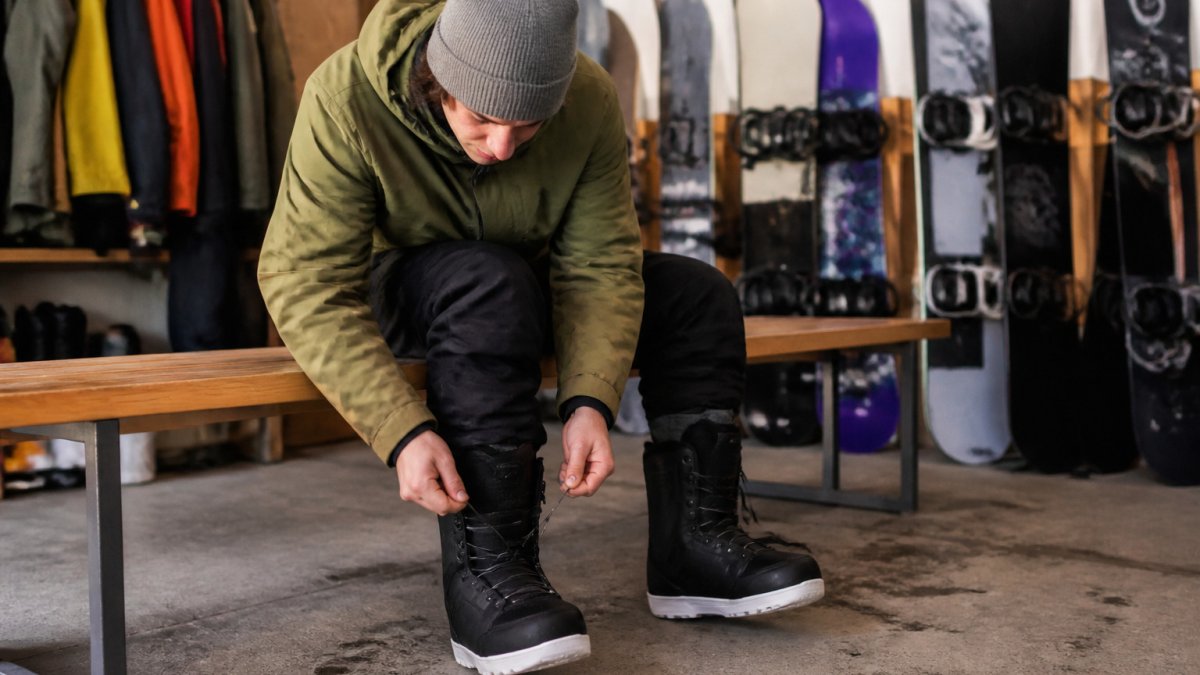
Run these quick checks:
- Toe contact: Stand straight and push your knees forward. Your toes should just touch the front.
- Heel hold: Your heel should stay put when you lean forward. Some small lift is normal at first, but a lot of lift means the boot is too big.
- Ankle support: Your ankle should feel held in place, not loose. It should not rub hard against the cuff.
These checks tell you more about fit than any single measurement.
Testing Fit in a Forward Riding Stance
Standing still is not enough. Bend your knees, lean slightly forward and shift your weight toward the toes, the way you would on a board.
BEDROCK Unisex Dial-Closure Snowboard Boots →
Keep your knees bent and hold the stance for a minute or two. If your toes jam forward or your heel lifts a lot, try a different size or model.
How to Break In Snowboard Boots Without Blisters
Most snowboard boots feel firm at first. A short break-in period helps the liner and shell settle around your foot and reduces hot spots and blisters.
Try this approach:
- Wear the boots indoors with the same socks you plan to ride in, for one to two hours at a time.
- Walk around, bend your knees and practise a few riding positions.
- Check for pressure points on the heel, the top of the foot and the shins.
- Loosen the laces or dial between sessions if you feel any pinching.
- Increase wear time slowly over several days.
If a boot still causes sharp pain after a proper break-in, stop wearing it. Pain that does not ease is a sign of poor fit, not something you should push through.
Watch out:
Don't ride in boots that cause numbness or tingling in your toes. Loss of feeling can point to pressure or poor circulation, so take the boots off and try a different size.
How Winter Boots Should Fit, Including Socks and Layering
Most fit guides stop at snowboard boots, but the same principles apply to insulated winter boots, snow boots and everyday cold-weather footwear. Our guide to whether cold-weather base layers are worth it covers how thermal layers change the way winter footwear fits. The goal is the same: hold the heel, leave toe room, and keep circulation moving so your feet stay warm.
Socks Change the Fit
Your socks change how a boot fits, so test boots with the socks you plan to use. A thick sock adds volume and can make a boot feel tight; a thin sock may leave the foot loose.
A common pattern is one thin moisture-wicking liner sock under a warmer outer sock. The liner moves sweat away from the skin and the outer sock traps warmth.
Watch Out: Never wear cotton socks in cold weather. Once cotton gets damp it stays damp, and wet feet lose heat fast.
Fitting Insulated and Everyday Winter Boots
For snow boots and insulated hiking boots, check the same three points you would on a snowboard boot:
- Toe room: You should be able to wiggle your toes without them pressing the front. A little room for a thicker sock is fine, but too much lets the foot slide.
- Heel hold: Walk a few steps. Your heel should stay seated with minimal lift, since a boot that slips at the heel will rub and blister on a long walk.
- Instep and width: The boot should close over the top of your foot without pinching. If you feel pressure across the instep, try a different width or a roomier cut.
Leave room for insoles if you use them. Adding a supportive insole takes up volume, so test the boot with the insole in place.
A Repeatable At-Home Fitting Checklist
Run this sequence for any winter footwear before you commit:
- Put on the socks you will actually wear.
- Stand and check toe contact and heel hold.
- Bend your knees into a riding or walking stance and recheck both.
- Walk for a minute and note any pressure points.
- Tighten the laces or dial and check that circulation still feels normal.
- Repeat after 10 minutes of wear, because liners settle as they warm up.
Troubleshooting Symptoms
| Symptom | Likely cause | What to try |
|---|---|---|
| Numb or tingling toes | Boot too tight or laces over-cinched | Loosen the lower lacing or dial, try a thinner sock |
| Cold toes despite warm socks | Poor circulation from pressure | Check fit across the instep, avoid double thick socks |
| Heel lift | Boot too long or too wide at the heel | Try a smaller size or a model with a narrower heel |
| Blisters on the heel | Friction from movement | Improve heel hold, check sock seams |
| Sore shins | Boot pushing the leg forward | Check flex and forward lean, adjust stance |
If a boot causes numbness or tingling that does not ease when you loosen it, stop wearing it. Loss of feeling can point to pressure or poor circulation, and pushing through it is not worth the risk.
Fit Maintenance Over Time
Liners pack out with use, so a boot that felt snug when new may feel loose after several weeks. Recheck heel hold and toe contact after your first few rides or walks. A thicker sock or supportive insole can restore some fit, but a boot that has become genuinely too big is best replaced.
Book a Fitting Check Before Your Next Mountain Trip
Browse our winter snowboard shoes to compare waterproof options built for snowy days. For help with break-in and comfort, check out the ThirtyTwo ZB-1 BOA snowboard boots, which use a precise lacing system. You can also review our unisex dial-closure snowboard boots and their sizing options. Good fit starts with the right size, so take a few minutes to check before you ride.


Frequently Asked Questions
How snug should snowboard boots feel?
Snowboard boots should feel snug across the heel, midfoot and ankle with no pinching or lifting. Your toes should lightly touch the front when you stand upright, and should just reach the end when you bend your knees forward in a riding stance. Some pressure on the top of the foot is normal in the first sessions, but numbness, sharp pain or sustained pressure points mean the boot is too tight or the lacing needs adjusting. Snug does not mean cramped, and your toes should still have a little room to wiggle.
Should my toes touch the end of snowboard boots?
Your toes should lightly touch the end of the boot when you stand upright, and should not be jammed against it. When you flex your knees forward into a riding stance, your toes should move slightly away from the front, which confirms the boot has the right length. If your toes stay pressed against the front in a riding position, the boot is likely too small. If your heel lifts noticeably with plenty of room in the toe box, a smaller size or a different volume may fit better.
How do you break in snowboard boots?
Wear your boots for short sessions at first, around one to two hours, and increase the time gradually over several days. Keep your socks thin and consistent, tighten the lacing as you would on the mountain, and flex the boots forward a few times before each ride. Warm the liners briefly if your model allows it, and avoid the temptation to wear new boots for a full day on your first outing. Note any hot spots and address them with padding or lacing changes before they become blisters.
How can you tell if winter footwear is too small?
Signs that winter footwear is too small include toes pressing against the front when you stand or walk, numbness after short periods, and pain across the top of the foot. Check whether your toes can wiggle freely when your feet are warm and the socks you plan to wear are on. If you lose feeling in your toes or they feel cramped during a short walk, the size is likely too small. Try a half size up or a different volume before you commit to a return.